

About
Results you can be proud of
When your school requires educational and operational program success, it is important to know that there are just a few important levers that make the difference for improving teacher and administrator capacity, student learning, and systems quality.
I develop personal relationships with districts and schools in order to understand and increase the capacity of teachers and administrators, advancing student learning and systems quality. I will help your district and schools in creating customized practices and processes that work for you and deliver results you can be proud of.
Services
I provide customized educational transition programs and solutions including
Diagnosis
What is the specific problem that your school is attempting to solve? Knowing your school’s specific problem requires accurate diagnosis of learning data, norms, structures, current practices, and actual system challenges. This is first step is crucial for the improving your school or school district.
Performance Variability of Subgroups
How do you make sure that all student experience high levels of academic growth and achievement? Regardless of the specific problem that is accurately diagnosed by your school or school district (i.e., mathematics achievement), the performance variability and/or “gap” between subgroups (e.g., disabled students, students who are non-English learners) must assume a position of priority-status for any improvement plan.
Mobilization
Understanding Your System, its Challenges, and How it Needs to Change and Improve
How do you know that your educational program will effectively function to provide high-quality results on behalf of students? Effective schools and school districts must properly understand system challenges to student learning in designing and implementing flexible practices, systems, and interventions. These challenges will include building alignments with practice, analyzing the use of time for “getting better”, analyzing policies and how they can better support improvements to learning, staying connected with greater purposes, creating new traditions, support this work beyond the school/District, and challenging the assumptions that limit effectiveness.
Benchmarking Improvement
How do you know that your systems and practices work for enhancing student learning? Your school and school district must use internal and external “knowledge of results” if systems changes are to make a difference for student learning. At this step, it is critical that schools and school districts build internal and external monitoring practices (i.e., rubrics for assessing the quality of written work, project-based assessments). Based on this monitoring information, school and school districts can make modifications for the continuous improvement of student learning.
Modifications for Continuous Improvement
When my internal and external monitoring practices says that a modification is required, how do I know what the modification should be? In this step, we will expand the effectiveness of a current practice until we find that area in your school or system where it “fails.” This will provide us with a robust understanding of the scope/strength of a particular practice. This methodology enables us to know the changes that are required at another level or in another area. (e.g., Implementation of an evaluation model with failure experienced in changing instructional practice with several subgroup of students. The modification will focus on a specific subgroup, then build to several subgroups)
Capacity Building
How can I be sure that teachers and administrators have the knowledge and skills to undertake this comprehensive improvement work? Humans and the organizational they inhabit are highly resistive to change. My work will focus on those artificial barriers which individuals, schools, and school districts create to inhibit improvement efforts. With this greater awareness, individual’s ad schools can change and improve student learning outcomes.
Why choose me? Because I deliver.
But don't take my word for it.

Dr. Hammack led the advancement of a 1:1 technology initiative for our 3,500-student school district. He instated an “Instructional Rounds” model where building principals and district leadership implemented 2.5 hours per day of instructional staff observations and targeted feedback – all focused on improving instruction and advancing student growth. As a district we implemented progress monitoring through his vision and support in bringing Northwest Evaluation Association (NWEA) to our district. He strives to make the district and all employees great, establishes clear goals, models expectations and communicates effectively with every constituent and group. Dr. Hammack is mission-driven and student centered.
– Jason Frasco, Morgan School District Re-3 Principal
Jim’s personal qualities have defined him as a Superintendent. He is visionary rather than reactionary, confident without being arrogant, collaborative but decisive when necessary, and direct without being rigid. When working with Jim, I find myself amazed at how effective his words and actions can be despite his unassuming nature. Jim is not an “in your face” type of leader. Rather he leads by applying his skills and experience efficiently, continuously building leadership capacity in others. Jim has motivated me and others to be the best we can be through thoughtful and sincere praise, direction and, when necessary, redirection.
– Jay Brickman, Hinckley-Big Rock CUSD 429 Principal.
Dr. Hammack implemented a variety of new successful initiatives. He was able to work with administrators on a new evaluation model for all principals , assistant principals, in directors. He collaborated with us to establish annual goals and conducted formal observations of our work with staff and met with us frequently to progress monitor our goals and provide us with quality feedback on how we could better improve our practices to ensure student success. Dr Hammack also guided individual administrators through a self-assessment process of our yearly performances, allowing for many meaningful conversations regarding how to be more effective leaders. I feel strongly that I am a better leader today because I was able to work alongside of him.
– Janelle Smith, Byron CUSD 226 Administrator.
Dr. Hammack exhibits a wide range of strengths and skills that have provided leadership to improve the district. When the board chose Dr. Hammack, we challenged him to increase standardized test scores, as prior to his arrival, scores had fallen considerably. Dr. Hammack succeeded in accomplishing this task using professional development, data analysis, teacher evaluation, and supporting his administrators and teachers. During his time at Byron, he led the district to exceptional scores on ACT, PSAE and NWEA/MAP. In his last year, the high school posted a 22.4 ACT, the highest since 2004 and the elementary school was nominated for National Blue-Ribbon recognition.
– Carol Nauman, Board Member for Byron CUSD 226
As a school board member, I was able to observe firsthand Dr. Hammack’s focus of what is best for kids. From his first day on the job, he dove into the work of streamlining and aligning the district's vision and mission with the strategic plan. He sought input from not only the school board but also district staff and parents and worked extensively with his administrative team to expand their leadership skills and supervisory abilities. This allowed the administrators to be able to provide more support in training for the teaching staff. Dr. Hammack’s vision for a 1:1 technology environment at the beginning of his time at Morgan School District was instrumental to the district's ability to continue virtual education for our students during the pandemic.
– Trish McClain, Board Member for Morgan School District re-3
Dr. Hammack has been one of the most multidisciplined, student centered, and financially accountable superintendents that has served the district. While not being an educator, I have witnessed the hands-on interactions Dr. Hammack has provided with our building principals and their leadership teams in advancing our long-term educational achievement goals. He has put forth a framework to offer support and guidance for the improvement of instructional strategies throughout the district while holding all team members accountable for the hard work and instruction-centered effort necessary to enhance the educational achievement of all students in the district.
– Mike Lee, Chief School Business Official for Morgan Re-3
Get my FREE whitepaper on Adaptive Leadership for Learning today
United States of America public schools and school districts find themselves under tremendous systems and societal pressures to achieve annual improvements for student academic growth and achievement, e.g. the continuous improvement of student learning. While schools and school districts participate in a regular litany of annual high-stakes testing, improvement plans, funding models, staffing models, intervention models, online programs, blended learning programs, and political pronouncements, at a data-analysis level, very little has seemed to change.
Dr. James Hammack
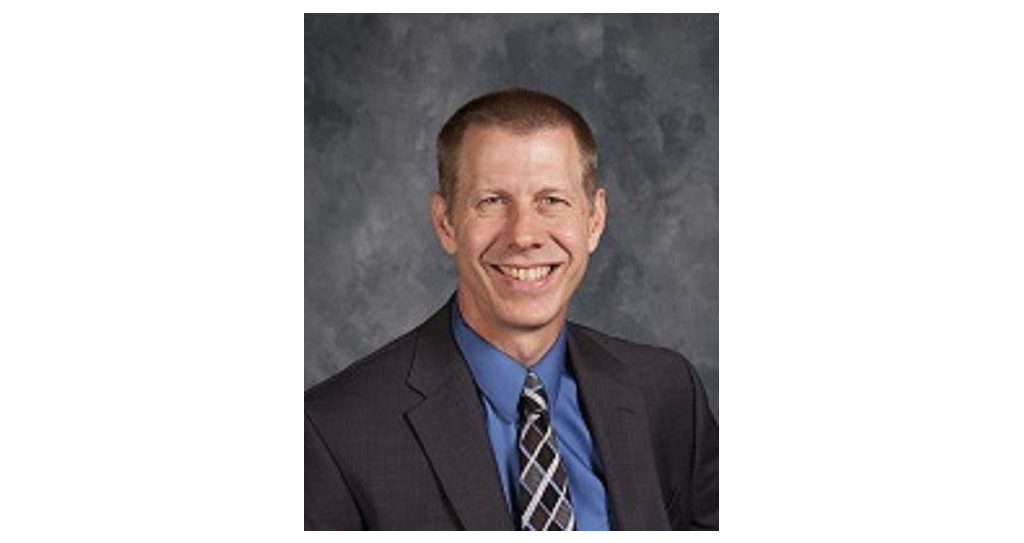
I have served 12 years as a public-school superintendent and 16 years as a high school principal and assistant principal. In that time, I advanced systems from "Good to Great" recognition based on state benchmarks while significantly reforming systems, structures, and practices.
For each school district, I led improvements in the total educational program that included an overall focus on gaining increased collaborative and professional development time for teachers and administrators to engage in purposeful work on curriculum, instruction, and assessment practice. I make extensive use of data to accurately diagnose student learning trends over several years, followed by strong planning for improvements and effective implementation of those plans. I have worked with three school districts to recognize and substantially strengthen the role of the principal and central office administration as instructional leaders.
I am proud of this work and of the student learning outcomes realized, including historic student learning outcomes regarding ACT achievement (22 or greater composite over multiple years), PARCC achievement that was 24 percentage points greater than the state average for four years, and SAT achievement that was 12 percentage points greater than the state over two years.
Presentations and additional training
- Local, State, and National Presentations on Results-Based Strategic Planning
- Harvard Graduate School of Education
- Center for Educational Leadership at the University of Washington
- McREL International
- American Association of School Administrators
- Carnegie Foundation for the Advancement of Teaching